


Monthly Archives: July 2026
Best Smart Car Gadgets for Long Trips: High-Tech Travel Essentials
Source:https://cdn.thewirecutter.com
Picture this: You are six hours into a cross-country road trip. The sun has completely dipped below the horizon, a torrential downpour hits your windshield, the kids in the back seat are growing restless, and suddenly, the check engine light flashes onto your dashboard. To make matters worse, your smartphone—which is actively running your navigation map—is sitting at 3% battery, and your cheap charging cable just split open. In a matter of seconds, a dream vacation morphs into a high-stress highway nightmare.
As someone who has spent more than a decade under hoods, testing cabin electronics, and logging thousands of miles across unforgiving terrain, I can tell you one absolute truth: the key to a successful road trip isn’t the horsepower under your hood; it’s the smart ecosystem inside your cabin. Modern cars are fantastic, but they are rarely equipped out-of-the-box to handle the extreme convenience and safety demands of extended highway travel.
That is where intelligent tech steps in as a lifesaver. Equipping your vehicle with the best smart car gadgets for long trips is no longer a luxury—it is a fundamental necessity for modern safety. Let’s look at the essential high-tech gear that will transform a grueling, exhausting drive into a seamless, stress-free adventure.
The Safety Foundation: Turning Raw Data into Peace of Mind
Before we even look at entertainment or comfort, we must ensure the mechanical health of our vehicle. Too many beginners ignore what is happening under the hood until smoke is pouring out of the radiator.
Smart OBD2 Scanners: The Digital Doctor in Your Pocket
When a check engine light illuminates, most drivers panic. In reality, your car is constantly communicating through an internal computer system called On-Board Diagnostics (OBD2). The problem is that it speaks in cryptic, five-digit trouble codes.
Using a Bluetooth-enabled smart OBD2 scanner (like a BlueDriver or FIXD) is like having a master mechanic riding shotgun. You simply plug this tiny device into the port beneath your steering wheel, and it translates those complex fault codes directly into plain, actionable English on your smartphone.
-
My Hands-On Insight: Over half of the check engine lights that occur on the interstate are triggered by minor bugs—like a loose gas cap or a temporary sensor glitch. With a smart scanner, you can instantly determine if you need to pull over immediately or if you can safely drive to your destination before visiting a shop.
Advanced Navigation and Visual Security
Seeing the road ahead is a basic requirement, but analyzing, recording, and mapping your journey using Artificial Intelligence (AI) is the modern benchmark.
Smart AI Dash Cams: The Witness That Never Blinks
Traditional dash cams just record loops of grainy video. However, the newest generation of smart dash cams utilize powerful AI processors and high-end sensors (like the Sony STARVIS series) to actively protect you.
AI Dash Cam Active Safety Loop:
[Camera Tracks Lane Markings] ➔ [AI Computes Real-Time Gap Dynamics] ➔ [Audible Collision/Drift Warnings]
These gadgets act as a secondary co-pilot through integrated Advanced Driver Assistance Systems (ADAS). If fatigue sets in and you begin to drift out of your lane, or if the vehicle ahead slams on its brakes, the camera’s computer flags the hazard in real-time and sounds an alert to snap your attention back to the asphalt.
Portable Smart Displays: Instant Infotainment Upgrades
If you drive an older vehicle that lacks factory-installed wireless Apple CarPlay or Android Auto, you do not need to spend a fortune replacing the entire dashboard stereo system.
A standalone, dashboard-mounted portable smart display connects to your phone wirelessly. It streams real-time maps, handles your Spotify playlists, and reads incoming text messages aloud via voice commands, ensuring your hands never leave the steering wheel.
Intelligent Power and Cabin Climate Management
On long trips, electrical power is the oxygen that keeps your devices alive. Managing that power efficiently is critical to keeping the peace inside the cabin.
Active-Cooled Smart Wireless Chargers
Running high-intensity GPS navigation while simultaneously using a standard wireless charger generates an immense amount of heat. On a hot summer day, this combination will cause your phone to rapidly overheat, slowing down its processing speed or shutting it off entirely.
-
The Tech Solution: The latest premium smart mounts feature miniature internal cooling fans or thermoelectric cooling pads. By actively drawing heat away from the back of your phone during high-speed charging cycles, they keep your device operating at optimal temperatures so your navigation never cuts out in the middle of a complex highway interchange.
Smart Gadget Performance Breakdown
To help you audit your cabin tech before your next major departure, let’s look at how these essential smart travel gadgets compare:
| Gadget Category | Popular Examples | Primary Highway Benefit | Installation Difficulty |
| Vehicle Diagnostics | BlueDriver / FIXD OBD2 | Instant trouble-code translation | Super Easy (Plug & Play) |
| Visual Security | Vantrue N4 Pro / 70mai AI | Real-time ADAS collision warnings | Moderate (Tucking wires) |
| Cabin Connectivity | Carpuride / Standalone Screen | Hands-free maps and media access | Easy (Suction mount) |
| Tire Monitoring | Smart External TPMS | Catches slow leaks before a blowout | Easy (Replaces valve caps) |
💡 Pro Expert Advice: The Hidden Threat of Cheap Power Inverters
Many road-trippers purchase cheap power inverters that plug into the cigarette lighter socket so they can charge laptops or run portable coolers inside the cabin. Warning: cheap inverters output a crude electrical current known as a Modified Sine Wave.
This choppy electrical current can permanently damage the sensitive internal circuitry of expensive laptops, drones, or DSLR camera batteries over time. If you need to power sensitive electronics on the road, always buy an inverter certified as a Pure Sine Wave inverter. It delivers clean, steady power identical to the electrical outlets in your home, keeping your high-end gear completely safe.
Final Thoughts: Drive Smarter, Arrive Safer
Investing in the best smart car gadgets for long trips isn’t about collecting unnecessary tech toys. It is about building a proactive shield against the unpredictable variables of the open road, ensuring that the only surprises on your trip are the beautiful scenic views.
By combining mechanical monitoring (OBD2), active driver assistance (AI dash cams), and stable power management, you gain absolute control over your environment, keeping everyone in your vehicle safe and comfortable for the long haul.
What high-tech gadget is an absolute must-have on your dashboard when you hit the highway? Are you currently trying to figure out the best camera or diagnostic setup for your specific vehicle? Drop your questions or road trip stories in the comments below, and let’s talk shop!
Best Radar Detectors for Highway Driving: Stay Alert on Long Trips
Source:https://s.yimg.com
You are cruising down a wide-open stretch of interstate, the cruise control is set a few miles per hour over the limit, and your favorite playlist is humming through the speakers. Suddenly, your eyes dart to the rearview mirror. Out of nowhere, a patrol car appears behind a concrete divider. Your stomach drops, your foot jerks toward the brake pedal, and that familiar wave of adrenaline hits your chest. We’ve all been there.
As someone who has spent over a decade testing high-performance vehicle modifications and logging countless long-distance highway miles, I can tell you that highway driving presents a unique challenge for radar detection. Unlike dense city driving where speed limits are lower and threats are close, the highway is all about high speeds and long distances. A late warning on the interstate is practically useless.
If you are looking for the best radar detectors for highway driving, you don’t just need a device that beeps; you need a system that acts as an extra set of eyes miles down the road. Let’s look at the elite devices dominating the highway in 2026 and how they keep you protected.
The Highway Dilemma: Sensitivity vs. Selectivity
When I first started analyzing radar technology years ago, I fell into the rookie trap of thinking “more range equals better protection.” It isn’t that simple. In the modern automotive landscape, your radar detector faces a constant barrage of invisible noise.
To understand how a detector works, think of it like a security guard standing at a crowded gate.
-
Sensitivity is how well the guard can hear a whisper from a mile away.
-
Selectivity is the guard’s ability to ignore the thousands of people talking nearby and focus only on the one voice that poses a real threat.
Modern cars are packed with Blind Spot Monitoring (BSM) systems, adaptive cruise control, and collision-avoidance radar. These systems operate on the K-band frequency—the exact same frequency used by many police radar guns. A cheap, low-end detector will scream every time a modern SUV passes you on the left. On a six-hour road trip, that constant falsing will drive you crazy enough to unplug the device completely, leaving you completely vulnerable.
The Top Contenders: Flagships Dominating the Interstate
If you are serious about protecting your license on extended road trips, these premium units offer the ultimate blend of extreme long-range sensitivity and smart digital filtering.
1. Uniden R8 / R8w: The King of Long-Range Awareness
Uniden has been at the top of the mountain for a while now, and the Uniden R8 (along with the updated Wi-Fi-enabled R8w) remains the absolute benchmark for highway enthusiasts.
Uniden R8 Core Architecture:
[Dual LNA Amplifiers] + [Front/Rear Antennas] ➔ Directional 360° Threat Arrow + 2+ Mile Detection Range
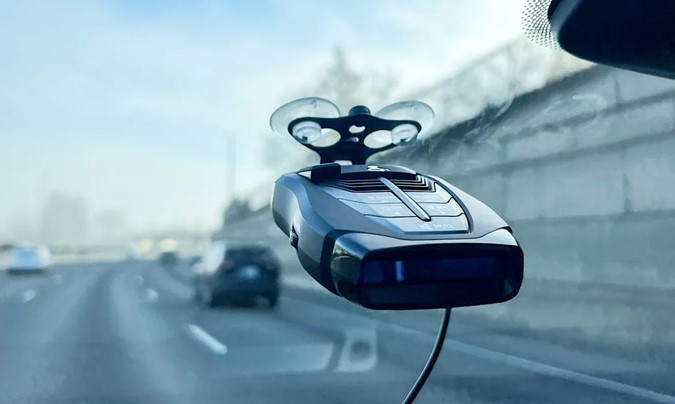
During my open-road testing, the R8’s dual Low Noise Amplifiers (LNAs) consistently sniffed out police Ka-band radar—the most common frequency used for highway speed traps—more than two miles away over rolling hills.
-
Why it rules the highway: It features dual antennas that feed clear directional arrows on the display. When the detector alerts, the arrows tell you instantly whether the threat is ahead, behind, or to the side.
-
Smart Filtering: It utilizes built-in GPS to offer an Auto-Mute Memory feature. If you pass a static false alert source (like a grocery store automatic door) multiple times, the device automatically remembers the GPS coordinate and frequency, muting it on subsequent trips.
2. Escort Redline 360c: The Intelligent Guardian
If Uniden is the raw performance choice, the Escort Redline 360c is the luxury smart option. Escort has poured decades of digital signal processing (DSP) expertise into this unit.
-
Total Stealth: The Redline 360c is completely immune to Radar Detector Detectors (RDD) like the Spectre Elite. If you frequently drive through regions where detectors are heavily restricted or illegal, this total stealth capability is a vital layer of protection.
-
The Connected Ecosystem: It relies on the Drive Smarter app community. The detector shares real-time cloud alerts with millions of other drivers on the road. It functions like an automated, hardware-integrated version of Waze, warning you of live speed traps reported by other vehicles miles before your own antenna even catches the signal.
3. Valentine One V1 Gen 2: The Purist’s Choice
Mike Valentine invented the directional arrow concept decades ago, and the Valentine One V1 Gen 2 refines that legacy with military-grade parts. It features unmatched raw speed and sensitivity.
The V1 Gen 2 excels at detecting Instant-On (IO) radar, where an officer leaves the radar gun turned off until your vehicle is targeted. The milliseconds saved by the V1’s rapid signal processing can mean the difference between reacting in time or pulling over to the shoulder. However, it lacks built-in GPS out of the box, meaning you will need to pair it with a smartphone app via Bluetooth to get advanced false-alert filtering.
Mid-Range and Budget Highway Alternatives
You do not necessarily have to spend $700+ to get dependable highway protection. If you are a beginner or a occasional road-tripper, these value-packed alternatives offer great peace of mind.
-
Uniden R4 / R4w: Think of this as a Uniden R8 but with a single front antenna. You lose the directional 360-degree arrows, but you retain the exact same extreme front-facing detection range and excellent GPS lockout capability for hundreds of dollars less.
-
Cobra RAD 700i: An exceptional entry-level option for the money. It provides a built-in GPS database for red-light camera protection and still manages to deliver up to a mile of forward-looking warning on wide-open highways, combined with solid out-of-the-box BSM filtering.
Highway Performance Breakdown
To help you choose the right companion for your next cross-country trip, let’s look at how these top performers match up across critical categories:
| Model | Primary Strengths | Directional Arrows? | GPS Lockouts | Stealth (RDD Immunity) |
| Uniden R8 / R8w | Industry-leading raw Ka-band range | Yes (360°) | Automatic | Excellent |
| Escort Redline 360c | Connected cloud ecosystem & filtering | Yes (360°) | Intelligent Auto-Learn | 100% Invisible |
| Valentine One V1 Gen 2 | Rapid response to Instant-On radar | Yes (360°) | Via App Only | Moderate |
| Uniden R4 / R4w | Best value long-range single antenna | No (Front Only) | Automatic | Excellent |
| Cobra RAD 700i | Best budget option for beginners | No (Front Only) | Manual / App | Basic |
💡 Pro Expert Advice: The Pitfall of Laser (LIDAR) Protection
Here is a hidden warning that many manufacturers won’t tell you on the retail box: a radar detector will not save you from a police laser gun.
Police Laser (LIDAR) uses a pinpoint light beam rather than a wide sweeping radio wave. If your radar detector alerts to a laser signal, it means the officer has already targeted your vehicle and pulled your exact speed. The detector is essentially acting as a “ticket notifier.” If you want true protection against laser enforcement on the highway, you must pair your windshield radar detector with a professionally installed Laser Shifter/Jammer system.
Final Thoughts: Staying Alert and Secure
Investing in one of the best radar detectors for highway driving transforms the entire atmosphere of a long road trip. It replaces the anxiety of the unknown with clear, actionable data, allowing you to focus on the road ahead rather than scanning every highway overpass for hidden enforcement.
For the ultimate highway setup, I highly recommend a dual-antenna system like the Uniden R8 or Escort Redline 360c paired with a crowd-sourced navigation app. That combination gives you maximum situational awareness from every angle.
Are you preparing for an upcoming road trip, or are you trying to decide between a single-antenna or a 360-degree directional system? Let me know your driving style and budget in the comments below, and let’s find the perfect setup for your dashboard!
Best Rally Car Brands: Manufacturers Dominating the Sport
Source:https://static0.carbuzzimages.com
Picture this: You are standing on a narrow, dirt-packed hairpin turn in the middle of a dense Finnish forest. The air is freezing, the smell of unburnt high-octane fuel floats through the trees, and the ground starts to vibrate. Suddenly, a hatchback blasts over a blind crest at 120 mph, completely airborne, before landing sideways, throwing a massive wall of gravel into the air, and rocketing away into the mist.
That is the World Rally Championship (WRC). Unlike Formula 1, where cars compete on pristine asphalt built with millimeter-perfect precision, rallying forces everyday production-based cars to battle ice, mud, rocks, and tarmac.
Over my decade spent working under the hoods of tuned sports cars and writing about motorsport evolution, I have driven and analyzed almost every mechanical setup imaginable. I can tell you firsthand that a great rally car is not just about raw horsepower; it is about survivability and a balance of engineering. Let’s take a deep-dive into the best rally car brands that have historically dominated—and continue to rule—this unforgiving sport.
The Pioneers of All-Wheel Drive Dominance
When beginners ask me what makes a vehicle thrive on loose gravel, I tell them to think of a mountain goat. It does not need the sprint speed of a cheetah; it needs relentless, sure-footed grip. For decades, manufacturers have fought to perfect that grip.
Lancia: The Uncrowned Kings of Group B and Beyond
If you want to talk about pure pedigree, you have to start with Lancia. Sadly, younger enthusiasts today only know Lancia as a struggling brand making city cars for Italy, but to me, they represent the absolute golden era of rallying.
Lancia still holds the record for the most WRC Manufacturers’ Championships with 10 titles. They gave us the mid-engined Stratos, the terrifying rear-wheel-drive 037 (the last RWD car to win a world title against AWD competitors), and the iconic Delta Integrale.
-
The Secret Sauce: Lancia treated technical regulations like a suggestion box. They engineered hyper-focused, fragile, yet blisteringly fast machines that forced the entire industry to adapt or get left behind.
Audi: The Quattro Revolution
Before 1980, almost all rally cars were rear-wheel drive. Then Audi showed up with the Quattro permanent all-wheel-drive system. It was heavy and clumsy at first, but on snow and gravel, it acted like a cheat code.
Audi completely rewrote the rulebook. They proved that distributing power to all four wheels was vastly superior to pushing from the back. If you drive a modern AWD car today, you owe a massive debt of gratitude to the engineers in Ingolstadt who suffered through early gearbox failures to perfect the technology.
The Nineties Legends: Cult Classics Born on Gravel
For many intermediate fans, the 1990s was the definitive era of rallying. This was the time of the Group A regulations, which required manufacturers to sell thousands of road-going versions of their race cars to the public (known as homologation specials).
Subaru: The Blue and Gold Dynasty
Mention the phrase “best rally car brands” to anyone who grew up in the 90s, and they will immediately picture a sonic blue sedan with gold wheels and a massive rear wing.
Subaru used the WRC to build its entire global identity. Driven by legends like Colin McRae and Richard Burns, the Subaru Impreza secured three consecutive manufacturers’ titles from 1995 to 1997.
-
The Technical Identity: Subaru’s signature was the Symmetrical All-Wheel Drive combined with a turbocharged Boxer engine. Because the cylinders lay flat rather than upright, the car had an incredibly low center of gravity. It felt like a pendulum—perfectly balanced when swinging through high-speed transitions.
Mitsubishi: The Precision Weapon
You cannot mention Subaru without immediately mentioning its arch-nemesis: Mitsubishi. The rivalry between the Impreza and the Lancer Evolution (Evo) on the rally stages fueled an automotive arms race that benefited road-car buyers for generations.
While Subaru relied on balance, Mitsubishi turned to electronic wizardry. They pioneered advanced active center differentials and active yawn control systems. With Tommi Mäkinen at the wheel, Mitsubishi took home four consecutive Drivers’ Championships from 1996 to 1999, proving that computer-aided traction could tame any surface.
Modern Titans: Efficiency, Electronics, and Aerodynamics
Modern rally cars look less like the cars in your driveway and more like spaceships. The current Rally1 regulations utilize complex hybrid drivetrains paired with extreme aerodynamic wings.
Citroën: The French Force of Nature
If Lancia is the king of the 20th century, Citroën rules the 21st. The French manufacturer holds 8 Manufacturers’ Titles, mostly achieved during an era of absolute dominance led by Sébastien Loeb—the most successful rally driver in history with 9 consecutive world championships.
Citroën mastered the art of front-wheel-drive dynamics before transitioning to ultra-reliable AWD systems in the Xsara, C4, and DS3 WRC cars. Their cars rarely broke down; they were built with mechanical tolerance levels that felt almost bulletproof.
Toyota: The Current Benchmark
Right now, Toyota Gazoo Racing is the gold standard of the WRC. With the Yaris WRC and the hybrid GR Yaris Rally1, Toyota has used its massive engineering budget to crush the competition over the last several seasons.
Toyota's Modern Dominance Formula:
[High RPM Turbo Engine] + [Aggressive Aero Downforce] + [Instant Hybrid Torque Boost] = Unmatched Stage Times
Toyota’s modern strategy is simple: building maximum mechanical grip through complex suspension geometry and combining it with instant electric torque out of slow corners.
Summary of the Top Rally Manufacturers
To give you a quick bird’s-eye view of how these titans stack up historically, let’s look at the numbers that define their legacies:
| Brand | Notable Models | WRC Manufacturers’ Titles | Key Engineering Highlight |
| Lancia | Delta Integrale, Stratos, 037 | 10 | Lightweight chassis & forced induction |
| Citroën | Xsara WRC, C4 WRC, DS3 WRC | 8 | Bulletproof reliability & tarmac handling |
| Toyota | Celica GT-Four, GR Yaris Rally1 | 7 | Advanced aerodynamics & hybrid deployment |
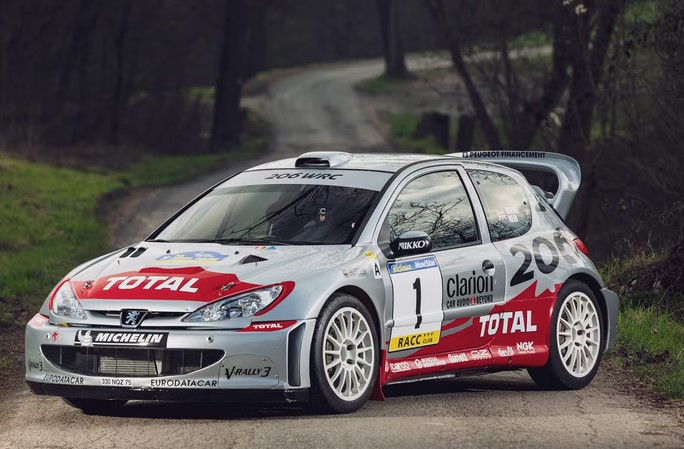
| Peugeot | 205 T16, 206 WRC | 5 | Short-wheelbase agility |
| Subaru | Impreza 555, Impreza WRC | 3 | Low center of gravity Boxer engine |
💡 Pro Expert Advice: The Homologation Trick
If you are an intermediate enthusiast looking to buy a performance car inspired by the stage, look for authentic homologation models. Vehicles like the older Subaru WRX STI, Mitsubishi Lancer Evolution, or the newer Toyota GR Yaris feature heavy-duty suspension mounting points, underbody packaging designed for gravel clearance, and robust differentials that standard sports cars simply do not have. They are built tough from the factory because their race-car twins required that exact blueprint to compete.
Final Thoughts: Which Brand Truly Rules?
Choosing the definitive number one among the best rally car brands depends entirely on what you value most. If you look at pure statistics, Lancia still wears the crown, with Citroën trailing closely behind. If you look at cultural impact and the cars that shaped modern street performance, Subaru and Mitsubishi remain unmatched.
Rallying is the ultimate test of automotive engineering because it forces a car to fight against nature itself. The manufacturers who have won here didn’t just build fast engines; they built machines that could survive a beating and keep moving forward.
Which era of rally design is your favorite? Do you prefer the raw mechanical chaos of the Group B Lancias, the iconic rumble of the 90s Subarus, or the high-tech hybrid speed of modern Toyotas? Let me know in the comments below!