


Daily Archives: July 5, 2026
Best Rally Car Brands: Manufacturers Dominating the Sport
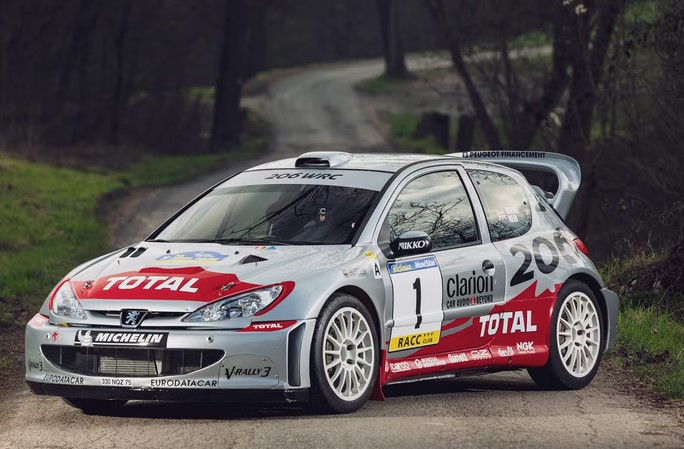
Source:https://static0.carbuzzimages.com
Picture this: You are standing on a narrow, dirt-packed hairpin turn in the middle of a dense Finnish forest. The air is freezing, the smell of unburnt high-octane fuel floats through the trees, and the ground starts to vibrate. Suddenly, a hatchback blasts over a blind crest at 120 mph, completely airborne, before landing sideways, throwing a massive wall of gravel into the air, and rocketing away into the mist.
That is the World Rally Championship (WRC). Unlike Formula 1, where cars compete on pristine asphalt built with millimeter-perfect precision, rallying forces everyday production-based cars to battle ice, mud, rocks, and tarmac.
Over my decade spent working under the hoods of tuned sports cars and writing about motorsport evolution, I have driven and analyzed almost every mechanical setup imaginable. I can tell you firsthand that a great rally car is not just about raw horsepower; it is about survivability and a balance of engineering. Let’s take a deep-dive into the best rally car brands that have historically dominated—and continue to rule—this unforgiving sport.
The Pioneers of All-Wheel Drive Dominance
When beginners ask me what makes a vehicle thrive on loose gravel, I tell them to think of a mountain goat. It does not need the sprint speed of a cheetah; it needs relentless, sure-footed grip. For decades, manufacturers have fought to perfect that grip.
Lancia: The Uncrowned Kings of Group B and Beyond
If you want to talk about pure pedigree, you have to start with Lancia. Sadly, younger enthusiasts today only know Lancia as a struggling brand making city cars for Italy, but to me, they represent the absolute golden era of rallying.
Lancia still holds the record for the most WRC Manufacturers’ Championships with 10 titles. They gave us the mid-engined Stratos, the terrifying rear-wheel-drive 037 (the last RWD car to win a world title against AWD competitors), and the iconic Delta Integrale.
-
The Secret Sauce: Lancia treated technical regulations like a suggestion box. They engineered hyper-focused, fragile, yet blisteringly fast machines that forced the entire industry to adapt or get left behind.
Audi: The Quattro Revolution
Before 1980, almost all rally cars were rear-wheel drive. Then Audi showed up with the Quattro permanent all-wheel-drive system. It was heavy and clumsy at first, but on snow and gravel, it acted like a cheat code.
Audi completely rewrote the rulebook. They proved that distributing power to all four wheels was vastly superior to pushing from the back. If you drive a modern AWD car today, you owe a massive debt of gratitude to the engineers in Ingolstadt who suffered through early gearbox failures to perfect the technology.
The Nineties Legends: Cult Classics Born on Gravel
For many intermediate fans, the 1990s was the definitive era of rallying. This was the time of the Group A regulations, which required manufacturers to sell thousands of road-going versions of their race cars to the public (known as homologation specials).
Subaru: The Blue and Gold Dynasty
Mention the phrase “best rally car brands” to anyone who grew up in the 90s, and they will immediately picture a sonic blue sedan with gold wheels and a massive rear wing.
Subaru used the WRC to build its entire global identity. Driven by legends like Colin McRae and Richard Burns, the Subaru Impreza secured three consecutive manufacturers’ titles from 1995 to 1997.
-
The Technical Identity: Subaru’s signature was the Symmetrical All-Wheel Drive combined with a turbocharged Boxer engine. Because the cylinders lay flat rather than upright, the car had an incredibly low center of gravity. It felt like a pendulum—perfectly balanced when swinging through high-speed transitions.
Mitsubishi: The Precision Weapon
You cannot mention Subaru without immediately mentioning its arch-nemesis: Mitsubishi. The rivalry between the Impreza and the Lancer Evolution (Evo) on the rally stages fueled an automotive arms race that benefited road-car buyers for generations.
While Subaru relied on balance, Mitsubishi turned to electronic wizardry. They pioneered advanced active center differentials and active yawn control systems. With Tommi Mäkinen at the wheel, Mitsubishi took home four consecutive Drivers’ Championships from 1996 to 1999, proving that computer-aided traction could tame any surface.
Modern Titans: Efficiency, Electronics, and Aerodynamics
Modern rally cars look less like the cars in your driveway and more like spaceships. The current Rally1 regulations utilize complex hybrid drivetrains paired with extreme aerodynamic wings.
Citroën: The French Force of Nature
If Lancia is the king of the 20th century, Citroën rules the 21st. The French manufacturer holds 8 Manufacturers’ Titles, mostly achieved during an era of absolute dominance led by Sébastien Loeb—the most successful rally driver in history with 9 consecutive world championships.
Citroën mastered the art of front-wheel-drive dynamics before transitioning to ultra-reliable AWD systems in the Xsara, C4, and DS3 WRC cars. Their cars rarely broke down; they were built with mechanical tolerance levels that felt almost bulletproof.
Toyota: The Current Benchmark
Right now, Toyota Gazoo Racing is the gold standard of the WRC. With the Yaris WRC and the hybrid GR Yaris Rally1, Toyota has used its massive engineering budget to crush the competition over the last several seasons.
Toyota's Modern Dominance Formula:
[High RPM Turbo Engine] + [Aggressive Aero Downforce] + [Instant Hybrid Torque Boost] = Unmatched Stage Times
Toyota’s modern strategy is simple: building maximum mechanical grip through complex suspension geometry and combining it with instant electric torque out of slow corners.
Summary of the Top Rally Manufacturers
To give you a quick bird’s-eye view of how these titans stack up historically, let’s look at the numbers that define their legacies:
| Brand | Notable Models | WRC Manufacturers’ Titles | Key Engineering Highlight |
| Lancia | Delta Integrale, Stratos, 037 | 10 | Lightweight chassis & forced induction |
| Citroën | Xsara WRC, C4 WRC, DS3 WRC | 8 | Bulletproof reliability & tarmac handling |
| Toyota | Celica GT-Four, GR Yaris Rally1 | 7 | Advanced aerodynamics & hybrid deployment |
| Peugeot | 205 T16, 206 WRC | 5 | Short-wheelbase agility |
| Subaru | Impreza 555, Impreza WRC | 3 | Low center of gravity Boxer engine |
💡 Pro Expert Advice: The Homologation Trick
If you are an intermediate enthusiast looking to buy a performance car inspired by the stage, look for authentic homologation models. Vehicles like the older Subaru WRX STI, Mitsubishi Lancer Evolution, or the newer Toyota GR Yaris feature heavy-duty suspension mounting points, underbody packaging designed for gravel clearance, and robust differentials that standard sports cars simply do not have. They are built tough from the factory because their race-car twins required that exact blueprint to compete.
Final Thoughts: Which Brand Truly Rules?
Choosing the definitive number one among the best rally car brands depends entirely on what you value most. If you look at pure statistics, Lancia still wears the crown, with Citroën trailing closely behind. If you look at cultural impact and the cars that shaped modern street performance, Subaru and Mitsubishi remain unmatched.
Rallying is the ultimate test of automotive engineering because it forces a car to fight against nature itself. The manufacturers who have won here didn’t just build fast engines; they built machines that could survive a beating and keep moving forward.
Which era of rally design is your favorite? Do you prefer the raw mechanical chaos of the Group B Lancias, the iconic rumble of the 90s Subarus, or the high-tech hybrid speed of modern Toyotas? Let me know in the comments below!