


Enterprise VR Training: Smarter Employee Learning Solutions
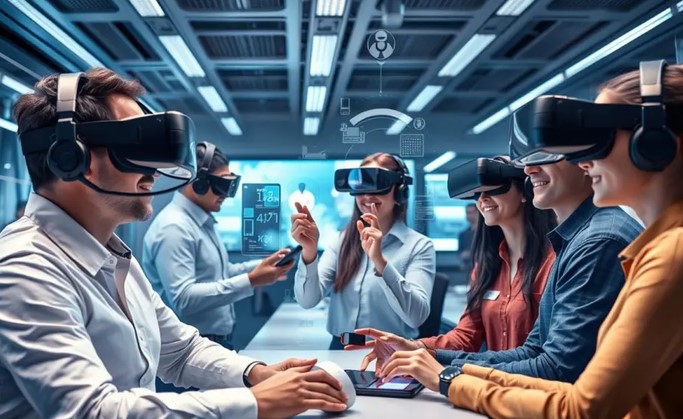
Source:https://epaouydin3q.exactdn.com
A surgical resident I was mentoring a few years back dropped a scalpel twice during her first simulated high-stress arterial procedure. Her hands were shaking, and her heart rate was spiking. In a traditional operating room, that kind of anxiety could lead to dangerous complications.
Instead of pausing for the day, she simply tapped a button on her headset, reset the spatial simulation, and ran the procedure four more times within forty minutes. By the end of the session, her precision movements were fluid and automatic.
That experience highlighted a powerful truth for me: traditional employee onboarding—packed with static slide decks, endless PDF manuals, and passive video modules—is failing modern workforces.
+-----------------------------------------------------------------------+
|                    THE ENTERPRISE LEARNING GAP                        |
+-----------------------------------------------------------------------+
|  Traditional Method  -->  Passive Consumption  -->  20% Retention     |
|  Enterprise VR       -->  Active Kinesthetic   -->  75%+ Retention    |
+-----------------------------------------------------------------------+
                                    |
                                    v
+-----------------------------------------------------------------------+
|             Business Impact: 4x Faster Time-to-Fluency                |
+-----------------------------------------------------------------------+
Across healthcare, aviation, manufacturing, and field logistics, modern organizations are embracing enterprise vr training to transform passive learning into active, risk-free mastery.
What Is Enterprise VR Training? (Beyond Gamification)
To grasp why immersive technology works so effectively, it helps to use a practical analogy.
Reading a textbook or watching a presentation about driving a heavy excavator is like looking at a printed map of a city. You get a sense of the layout, but you don’t actually know what it feels like to steer through tight streets during a torrential downpour.
Enterprise VR training puts the learner directly behind the wheel of that excavator. It builds spatial awareness, muscle memory, and real-time decision-making skills without burning fuel, wearing out physical equipment, or risking workplace injuries.
┌─────────────────────────────────────────────────────────────────┐
│              IMMERSIVE TRAINING ECOSYSTEM                       │
├────────────────────────────────┬────────────────────────────────┤
│      HARDWARE & DISPLAY        │      SOFTWARE & TELEMETRY      │
│  • Standalone Headsets (6DoF)  │  • Spatial Analytics Engines   │
│  • Haptic Feedback Gloves      │  • Biometric Stress Tracking   │
│  • Eye-Tracking Sensors        │  • LMS Integration (SCORM/xAPI)│
├────────────────────────────────┴────────────────────────────────┤
│                      SPATIAL SIMULATION ENGINE                  │
│    • Real-Time Physics  • Multi-User Collaboration  • Scenarios  │
└─────────────────────────────────────────────────────────────────┘
By combining 6 Degrees of Freedom (6DoF) hardware, real-time spatial analytics, and adaptive software, immersive platforms turn abstract concepts into tangible experiences.
Why Legacy Employee Training Is Obsolete
Studies show that traditional classroom instruction yields retention rates as low as 20% after one week. Immersive enterprise environments flip those numbers completely.
                     +---------------------------+
                     |  Enterprise VR Value      |
                     |       Trifecta            |
                     +-------------+-------------+
                                   |
         +-------------------------+-------------------------+
         |                         |                         |
         v                         v                         v
+------------------+     +-------------------+     +-------------------+
|  Accelerated     |     |  Zero-Risk        |     | Granular Data     |
|  Mastery         |     |  Environments     |     | Telemetry         |
|  4x Faster Train |     |  Safe Failure     |     | Eye Tracking/LMS  |
+------------------+     +-------------------+     +-------------------+
1. Accelerated Time-to-Fluency
Learners in immersive environments focus entirely on the scenario without phone notifications, browser tabs, or office interruptions. Data indicates employees complete immersive modules up to four times faster than traditional e-learning sessions while retaining twice as much information.
2. Risk-Free Failure Modes
High-risk industries cannot afford on-the-job trial and error. VR allows technicians, surgeons, and emergency responders to make catastrophic mistakes safely—like mishandling hazardous chemicals or misinterpreting critical telemetry—learn from immediate feedback, and correct their approach.
3. Granular Behavioral Telemetry
Unlike a multiple-choice quiz that only tests recall, immersive software tracks exact head movements, hand placement speed, spatial decision latency, and eye tracking. Instructors gain clear insight into how an employee solves a problem, not just whether they guessed the correct answer.
Key Business Applications of Enterprise VR Training
Immersive learning extends far beyond basic simulations. Forward-thinking companies deploy virtual reality across four primary operational areas:
| Operational Area | Primary Use Case | Key Business Benefit |
| High-Risk Operations | Chemical handling, oil rig maintenance, surgery | Reduces workplace injuries and equipment damage |
| Technical Onboarding | Assembly line operations, machinery calibration | Shortens onboarding time for new hires |
| Soft Skills & Leadership | De-escalation training, performance reviews | Increases empathy and confidence in tough conversations |
| Emergency Response | Active threat mitigation, fire safety protocols | Builds muscle memory under high stress |
Technical Architecture: Integrating VR into Your Stack
Deploying enterprise vr training requires seamless integration with existing corporate IT infrastructure. A standalone headset is useless if it cannot communicate with your human resource system.
+-------------------------------------------------------------------+
|                  ENTERPRISE VR INTEGRATION PIPELINE               |
+-------------------------------------------------------------------+
| [ VR Headset Fleet ] --> [ MDM Remote Sync ] --> [ Spatial Engine ]|
|  Hardware Layer          Device Management        Scenario Logic   |
+-------------------------------------------------------------------+
                                  |
                                  v
+-------------------------------------------------------------------+
|             Enterprise LMS System (xAPI / LRS Data)               |
+-------------------------------------------------------------------+
Mobile Device Management (MDM)
Managing hundreds of virtual reality headsets across multiple locations requires enterprise MDM solutions like VMware Workspace ONE or ArborXR. IT teams push app updates, manage device security settings, and enforce compliance policies remotely.
xAPI and Learning Record Store (LRS)
Standard SCORM packaging isn’t built for 3D environments. Modern VR platforms leverage Experience API (xAPI) to send complex telemetry metrics—such as time spent looking at warning indicators or sequence precision—directly into a central Learning Record Store (LRS).
Feature Comparison Matrix
┌─────────────────────────────────────────────────────────────────┐
│                 TRAINING METHODOLOGY COMPARISON                 │
├────────────────────┬──────────────────────┬─────────────────────┤
│ FEATURE            │ TRADITIONAL E-LEARNING│ ENTERPRISE VR       │
├────────────────────┼──────────────────────┼─────────────────────┤
│ Engagement Type    │ Passive (Screen/Text)│ Active Kinesthetic  │
│ Cost per Learner   │ Low upfront cost     │ Scalable ROI        │
│ Hazard Exposure    │ Theoretical only     │ Zero physical risk  │
│ Skill Retention    │ Low (20-30%)         │ High (75-80%)       │
└────────────────────┴──────────────────────┴─────────────────────┘
Expert Advice: Pro Tips & Hidden Traps
Over a decade of evaluating tech implementations across complex environments has revealed key lessons for success.
PRO TIP: Start with High-Friction Use CasesDon’t build a VR training module for something a short video clip can easily explain. Target training areas that are expensive, dangerous, logistically complex, or require specialized hardware that is rarely available for practice. That is where virtual reality delivers immediate, measurable ROI.
HIDDEN WARNING: Beware the Hardware Provisioning TrapThe most common failure in pilot deployments is neglecting hardware logistics. Companies invest heavily in 3D content development but forget to plan for headset sanitization, battery management, Wi-Fi bandwidth limits, and device storage. Without a clear fleet management strategy, your pilot will stall before scaling.
Actionable Steps to Roll Out Immersive Training
-
Identify the Right Pilot Scenario: Pick one high-risk or high-cost training module where current training methods fall short.
-
Define Success Metrics Early: Establish baseline measurements for completion speed, safety error rates, and training costs before writing a single line of VR code.
-
Choose Open Standards: Select hardware and software platforms that support xAPI data standards and integrate smoothly with your existing Learning Management System (LMS).
-
Plan for Pilot Expansion: Partner with your IT and network security teams during phase one to ensure your wireless infrastructure can support device provisioning.
Integrating enterprise vr training is more than adopting slick hardware—it’s a fundamental shift toward experiential, data-driven workforce development.
Ready to Modernize Your Training Strategy?
Is your enterprise exploring immersive simulations, or are you trying to overcome hardware logistics and content creation challenges? Leave a comment below with your industry and biggest training bottleneck, and let’s discuss how to build a scalable solution!